
Deciding on a suitable school for your child might be one of the most significant decisions any parent has to make. With a wide range of educational systems in existence nowadays, many parents have started to explore Steiner education and understand its benefits versus a conventional ‘mainstream’ classroom environment.
The philosophy of Steiner Education, or Waldorf Education, is centred on individualised and holistic development of a child. Where other education systems concentrate on academic achievements of their students, Steiner schools balance academic success alongside intellectual, creative, and emotional development.
If you’re comparing different schooling options, this guide will help you understand the key ideas behind Steiner learning and why many families are exploring Steiner vs mainstream school approaches.
What is Steiner education?
Steiner education recognises that each child develops in their own way, and that learning unfolds through distinct stages of childhood. At The Armidale Waldorf School, teaching is shaped by careful observation of the child, the class and the developmental needs of each age group.
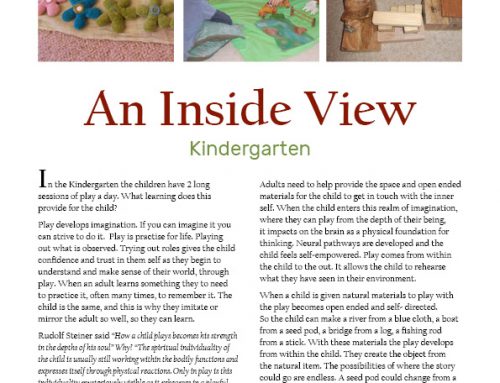
Rather than placing early pressure on children to meet academic benchmarks before they are ready, learning is introduced in meaningful, experiential and age-appropriate ways. In the younger years, children observe the world closely, engage through movement, imagination and practical activity, and gradually build understanding through lived experience.
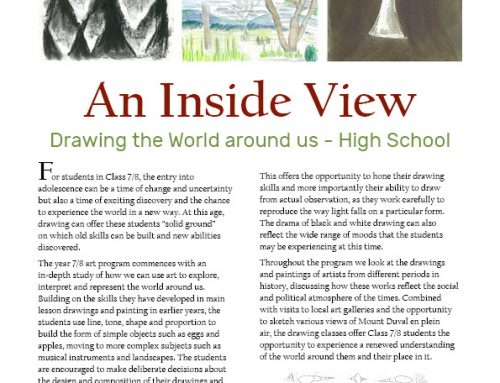
As students move into High School, this foundation develops into critical thinking, independence and reflection. In this way, assessment is not limited to test scores but grounded in a teacher’s deep knowledge of each child and their unfolding capacities.
Learning Grounded in Observation and Experience
Steiner education is an approach that educates the whole child through the “head, heart and hands”, nurturing thinking, feeling and doing. As Steiner Education Australia describes, academic learning is supported by artistic, practical, social and physical experiences, with wellbeing at the centre of education.
Students are encouraged to engage with concepts through movement, storytelling, discussion, artistic activity and lived experience. This helps them build understanding in a meaningful and well-rounded way, while developing confidence, creativity, resilience and a love of learning.
Steiner education also supports students to develop a sense of social responsibility and connection to the world around them. Through relationships, practical work, nature-based learning and community experiences, children are encouraged to see themselves as active participants in their class, school, community and wider world.
What Makes Steiner Education Different?
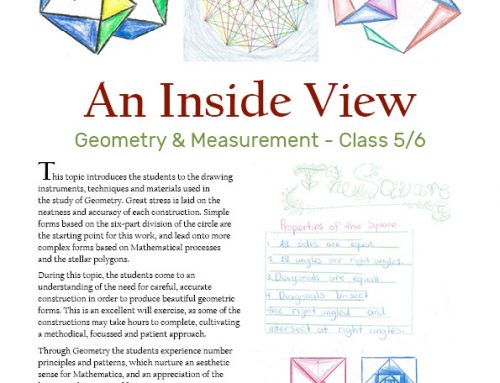
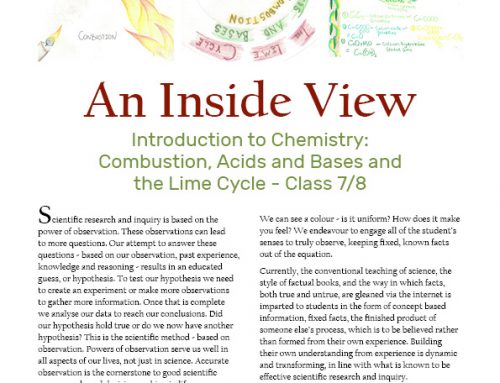
One of the most noticeable differences in Steiner education is how subjects are taught. Students begin each day with a two-hour Main Lesson, studying one multidisciplinary topic in depth over three to four weeks. This allows children to enter more deeply into the topic, with time for differentiation, complexity, questioning and response. Each Main Lesson topic is carefully designed to meet the child’s stage of development, speaking to their imagination, inner life and growing understanding of the world.
Learning is also supported by practical and social experiences such as gardening, cooking, outdoor education, team building activities and class projects. These activities help children build real-life skills, confidence and cooperation, while connecting learning to purposeful work and the world around them.
Understanding Steiner vs Mainstream School
A lot of parents researching Steiner vs mainstream schools are not necessarily trying to find out which of the two options is better, but rather which type of setting would work for their child.
Steiner Schooling:
- Learning is through a multi-disciplinary approach
- Extended lesson blocks allow deeper exploration of topics
- Creativity is integrated into almost all subjects
- Learning development stages and wellbeing is foundational to all teaching practise
- A typical day is structured based on a ‘head, heart and hands’, balancing intellectual Main Lessons with creative expression, practical arts and life skills
- All lessons are taught in the one classroom where students are encouraged to build a deep sense of responsibility and connection
- Curriculum is designed to meet both the NSW Education Standards Authority (NESA) curriculum and the Australian Steiner Curriculum Framework
Mainstream School:
- Subjects are taught in stand-alone approach in short lesson blocks
- Subjects are taught in different classrooms (high school)
- Lessons can feel fast paced with formal learning required from Kindergarten
- Learning is based on the state curriculum requirements only (e.g. NESA)
- More emphasis is placed on standardised testing and academic benchmarks
- Quality of education and wellbeing programs vary significantly between schools
- Students wear uniforms
There is no right or wrong way when it comes to education. Some students find certain atmospheres more beneficial than others, and each school has their own culture and advantages.
Selecting a Learning Environment that Suits Your Child
Each child is unique. Some thrive in highly structured environments, while others thrive better from experiential approaches.
When considering Steiner vs mainstream school, consider questions such as:
- How does my child learn best?
- Does my child love creative and hands-on activities?
- Which school community would be best for our family?
- Which values are more important for our child’s education?
Observing the classroom and talking to the teachers may often give you the best insight into whether the specific environment is the right one.
Discover Steiner Education in Person
While it’s easy to read about Steiner Education, experiencing it is something else entirely. Visiting a school is an opportunity for you to experience the learning environment yourself, meet the teachers, and gain a better insight into the process of how the children learn, develop, and thrive at the school.
Ready to find out more? Get in touch with The Armidale Waldorf School and arrange a school tour now.
Frequently Asked Questions